The importance of adapted exercise in CMT
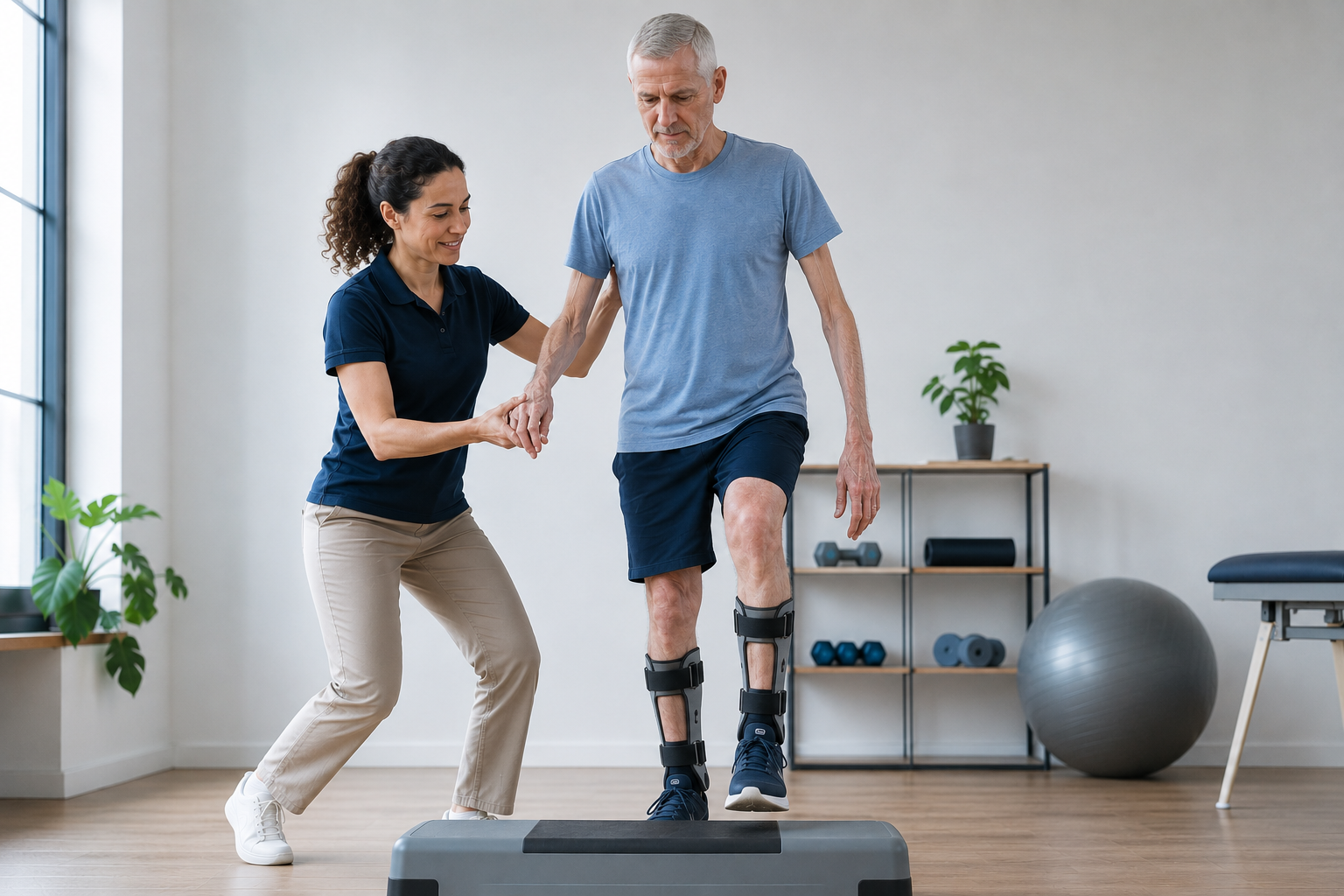
Exercise is healthy — including with Charcot-Marie-Tooth disease. The key is to adapt it: enough to maintain strength and fitness, but without overloading the vulnerable nerves and muscles.
Why movement matters
CMT causes gradual muscle weakness, especially in the feet, lower legs and hands, and can affect balance. Not moving, however, leads to further loss of fitness and stiffness, making everyday activities even harder. Regular, adapted exercise helps to preserve muscle strength, flexibility, balance and endurance as much as possible.
Which exercise is suitable?
- Low impact: swimming, cycling (including a home trainer) and exercises in water spare the joints.
- Tailored strength training: light, controlled exercises to maintain key muscle groups.
- Stretching: to prevent shortening (contractures) of tendons and muscles.
- Balance and stability exercises: to reduce the risk of falling.
What to watch out for
Overexertion can be counterproductive in CMT. The "no pain, no gain" rule does not apply here. Keep the following in mind:
- Build up gradually and alternate effort with enough recovery.
- Avoid exercising to complete exhaustion or with persistent pain.
- Choose safe activities with a low risk of falling; use support if needed.
- Wear good footwear and, if prescribed, your orthoses (for example an ankle-foot orthosis).
Get professional guidance
A physiotherapist or rehabilitation physician familiar with neuromuscular conditions can design a programme tailored to your strength, fitness and goals. That way you gain the benefits of exercise with minimal risk.
This article is for information only and does not replace medical advice. Consult your care provider before starting a new exercise programme.