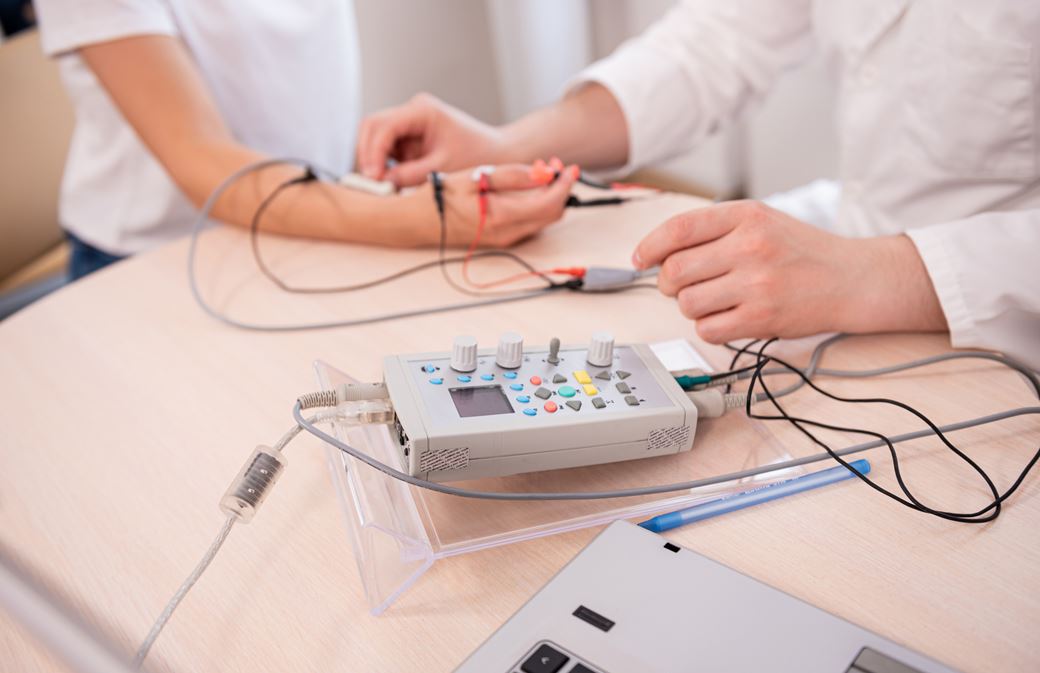
🩺 Diagnosis process
CMT diagnosis requires a systematic approach combining clinical examination, electrophysiological tests and genetic analysis. Early diagnosis enables better management.
Step 1: Neurological consultation
📋 Medical history
- Symptom history - Onset, progression, severity
- Family history - Search for hereditary patterns
- Functional limitations - Impact on daily life
- Medications - Exclusion of toxic causes
🔍 Physical examination
- Inspection - Muscle atrophy, deformities
- Muscle strength - Systematic MRC testing
- Reflexes - Often absent or diminished
- Sensation - Touch, vibration, position
🚶♂️ Functional assessment
- Gait - Gait analysis
- Balance - Stability tests
- Fine motor skills - Manual dexterity
- Endurance - Fatigue with exercise
Step 2: Electrophysiological tests
⚡ Electromyography (EMG)
- Nerve conduction - Speed and amplitude
- CMT type - Demyelinating vs axonal
- Severity - Degree of nerve damage
- Distribution - Affected nerves
📊 Result interpretation
- CMT1: Speed <38 m/s (demyelinating)
- CMT2: Speed >38 m/s (axonal)
- CMTX: Intermediate speed (30-40 m/s)
- Conduction blocks: Sometimes present
🎯 Test importance
- Differential diagnosis - Exclude other neuropathies
- Classification - CMT type
- Follow-up - Evolution over time
- Genetic counseling - Test guidance
Step 3: Genetic testing
🧬 Modern genetics
Genetic tests allow definitive diagnosis and precise genetic counseling. More than 100 genes are known to cause CMT.
🔬 Genetic panels
- CMT1A (PMP22) - 70% of all cases
- CMTX (GJB1) - 10-15% of cases
- CMT1B (MPZ) - 5% of cases
- Extended panels - 100+ genes
📝 Test process
- Blood sample - Simple blood draw
- Informed consent - Prior information
- Timeframe - Usually 4-8 weeks
- Genetic counseling - Before and after
🎯 Benefits of genetic diagnosis
- Definitive diagnosis - Final confirmation
- Prognosis - Probable evolution
- Family counseling - Family risks
- Research - Study participation
Differential diagnosis
⚕️ Other neuropathies
- Diabetic neuropathy - Elevated blood sugar
- Alcoholic neuropathy - Alcohol consumption
- Inflammatory neuropathies - CIDP, GBS
- Toxic neuropathies - Medications, toxins
🧠 Other neurological conditions
- Amyotrophic lateral sclerosis - Rapid progression
- Myopathies - Primary muscle involvement
- Hereditary ataxias - Coordination disorders
- Déjerine-Sottas disease - Severe early form
🔍 Distinctive elements
- Heredity - Family pattern
- Slow progression - Evolution over years
- Distal distribution - Feet and hands first
- Symmetry - Both sides affected
After diagnosis
📋 Management plan
Once diagnosis is confirmed, a multidisciplinary approach optimizes quality of life and prevents complications.
👨⚕️ Medical team
- Neurologist - Primary medical follow-up
- Physiotherapist - Exercise and mobility
- Occupational therapist - Daily adaptations
- Orthotist - Specialized equipment
📅 Regular follow-up
- Consultations - Annual or biannual
- Functional assessments - Standardized tests
- Prevention - Avoidable complications
- Adaptations - According to progression
👨👩👧👦 Genetic counseling
- Family risks - Hereditary transmission
- Family planning - Advice for children
- Prenatal testing - Available options
- Psychological support - Guidance